

I-LABS | March 2026
About the study:
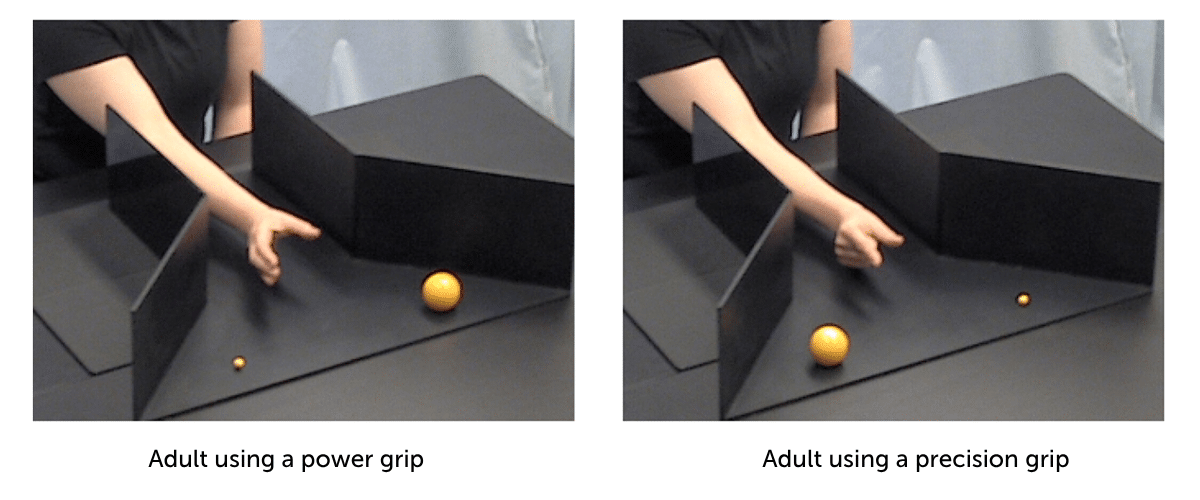
Researchers studied 12-month-old infants to understand whether babies use their own motor systems to interpret other people’s actions. Infants watched an adult reach toward objects using either a whole hand grasp or a precision finger grasp. In one condition, babies’ hands were free, and in another, their fingers were gently constrained to limit certain grasping movements.
The researchers measured where infants looked to see whether they anticipated the adult’s goal. They found that limiting babies’ hand movements changed how they processed the action, particularly for infants with stronger fine motor skills. The findings suggest that infants use their own motor experiences to help make sense of what they see others do.
Katrina's take:
This research suggests that infants use their own motor systems as additional data to help make sense of what they see others do.
It reinforces several key principles about early brain development:
- Learning is a physical activity just as much as it is a mental process. Babies do not learn only through observation. They learn through movement and action.
- Practicing fine motor skills supports social understanding. Skills like grasping, pinching and manipulating small objects help babies interpret the goal of other people’s actions.
- Gross motor development lays the foundation and supports other developmental domains. Sitting, reaching, crawling and coordinated arm movements expand babies’ opportunities to explore, observe, and practice goal directed action.
- Developmental domains are interconnected. Movement, perception, cognition and social understanding are building together.
- Motor development is not separate from brain development. It is one of the engines that drives it.
Ideas for making everyday routines powerful brain building opportunities:
- During meals, offer opportunity for babies to practice self-feeding. It strengthens fine motor coordination while also strengthening attention and problem solving skills.
- During floor play, offer toys or materials just beyond a baby’s reach to encourage reaching, rolling, crawling, and pulling up. Supporting large muscle development for gross motor skills that expands babies’ ability to engage with people and objects.
- Offering toys of different sizes and textures builds both fine motor control and curiosity.
- Slowing down. Intentionally demonstrating your own actions help babies see how hand shapes match objects and goals.
- Narrating what you are doing connects movement to language and meaning.
- Simple moments such as stacking blocks, picking up cereal pieces, climbing onto a cushion, or turning the pages of a book are strengthening both the body and the brain.
The takeaway is clear. Supporting both gross and fine motor development is not just about physical milestones. It strengthens the neural systems that help babies understand others, anticipate actions, and make sense of their social world.

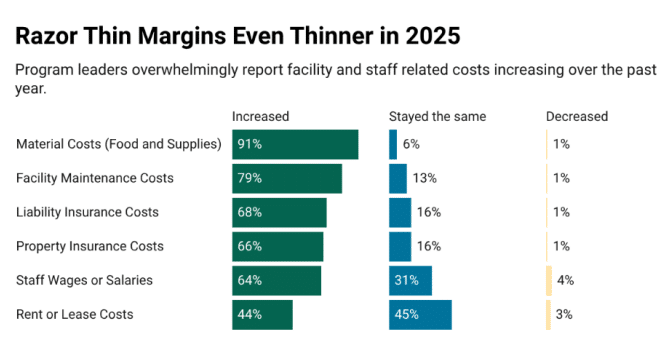




 A recent Seattle Times article focuses on the School House Connection report,

 Phil’s take:


 What the research says:
This study examined whether recorded maternal speech could influence brain development in very preterm infants cared for in the neonatal intensive care unit (NICU). Researchers played recordings of mothers reading aloud to their babies for several hours each night over multiple weeks. MRI scans taken near term-equivalent age showed that infants exposed to these recordings had more mature development in the left arcuate fasciculus, a brain pathway critical for speech and language.
The findings suggest that consistent exposure to human speech, even in the earliest stages of life, may help strengthen neural connections that support later language development.
Mike’s take:
We know that nurturing relationships and low parental stress are essential to healthy child development,
What the research says:
This study examined whether recorded maternal speech could influence brain development in very preterm infants cared for in the neonatal intensive care unit (NICU). Researchers played recordings of mothers reading aloud to their babies for several hours each night over multiple weeks. MRI scans taken near term-equivalent age showed that infants exposed to these recordings had more mature development in the left arcuate fasciculus, a brain pathway critical for speech and language.
The findings suggest that consistent exposure to human speech, even in the earliest stages of life, may help strengthen neural connections that support later language development.
Mike’s take:
We know that nurturing relationships and low parental stress are essential to healthy child development,